Therapist – and admitted nighttime ceiling-starer – Con Healy examines why people stay awake at night … and offers solutions. Not getting enough sleep regularly doesn’t just make you feel awful the next day – it quietly increases your risk for serious physical and mental health problems over months and years.
By Con Healy
Back in the day I worked night shifts. It wasn’t unusual for me to start work at 4pm and clock off just after midnight. It was a high pressure job putting out a daily newspaper. Meeting the midnight print deadline meant stress, adreneline and bad food habits.
For years, I would get home and be “wired” from adreneline until 2am, maybe longer.
When I was moved to the day shift, my poor sleep habits stayed with me. I usually had no problem falling asleep, my problem lay with staying asleep. Most nights it would a 2am mental alarm call.
Sometimes I lay awake looking at the ceiling. Other times I would get up and write in my journal, or watch bad middle-of-the-night TV. Maybe two hour later I might drift back to bed for a few more hours … until the kids woke me. Of course there were the usual slices of peanut butter toast and a comforting cup of tea.
My doctor was sympathic and which led me to being reliant on various pharm medication.Sometimes they worked, a lot of times they didn’t. It was the same with alcohol – with the added bonus of dealing with a hangover at 2.30am. It was the same with alcohol – with the added bonus of dealing with a hangover at 2.30am.
My GP was happy if I was getting six hours sleep a night.
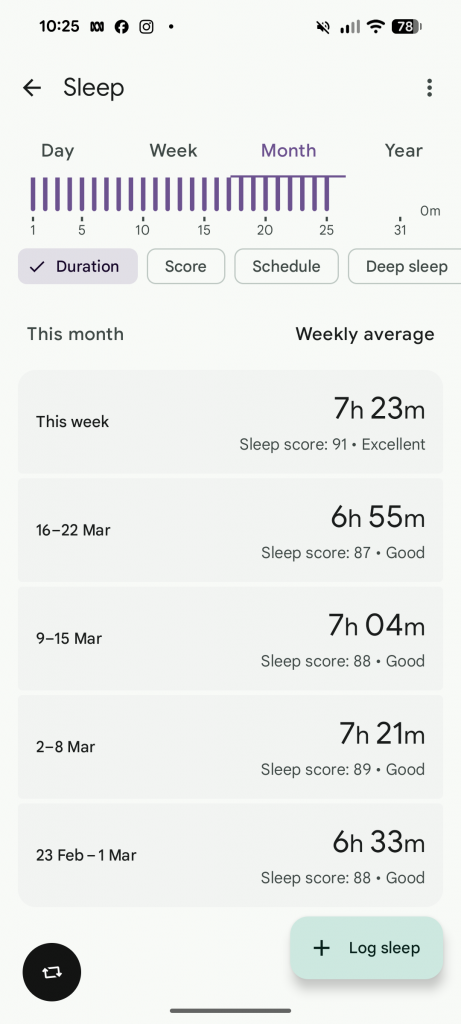
Research has shown that most of us do best on 7–9 hours of sleep a night – not just once in a while, but most nights of the week.
Less than that, over time, is linked with low mood, higher anxiety, foggy thinking, and physical health problems. More isn’t always better either; regularly sleeping 9–10 hours or more can sometimes be a flag that something else is going on.
The sweet spot is the amount of sleep that lets you wake most days feeling reasonably rested, stay awake without relying on caffeine to get through, and think clearly. For many adults, that’s somewhere in that 7–9 hour window.
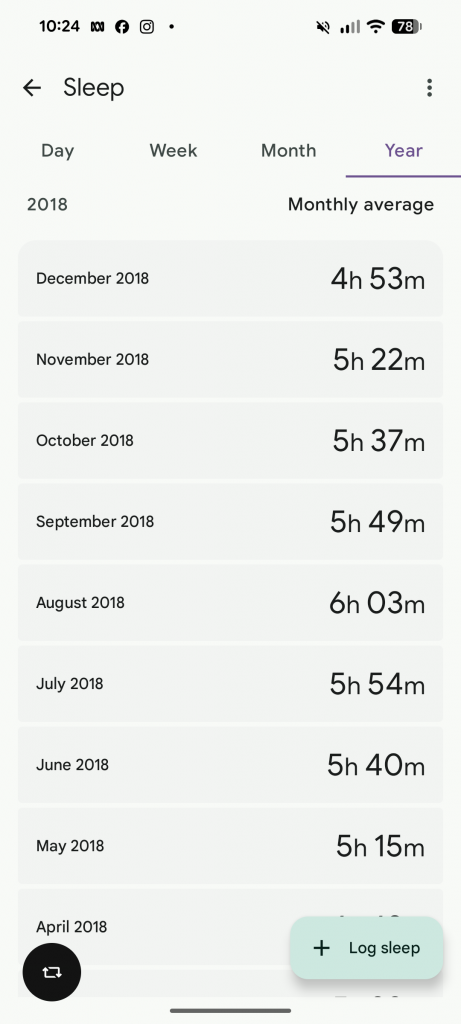
Me? I was working, being a dad and being a husband … usually with four hours sleep under my belt (This was back in 2002-2018).
When we regularly cut our sleep short, the first things to suffer are mood and thinking.
People become more irritable, anxious, low in mood, foggy, and forgetful, with slower reaction times and poorer judgment.
That’s why sleep loss is so strongly linked to accidents at work and on the road. Over time, chronic sleep deprivation stresses the body too. It’s associated with higher blood pressure, heart disease and stroke, weight gain and obesity, type 2 diabetes, weakened immunity, and even higher overall risk of early death.
In short: not getting enough sleep regularly doesn’t just make you feel awful the next day – it quietly increases your risk for serious physical and mental health problems over months and years.
Most people don’t lie awake at night because they’re “bad sleepers” – it’s because night is when the noise drops and the mind finally gets loud. With no emails, no meetings, no kids to get to school, the brain starts pulling out unfinished business: money worries, work stress, health fears, relationship tensions, grief that hasn’t had space in the daylight.
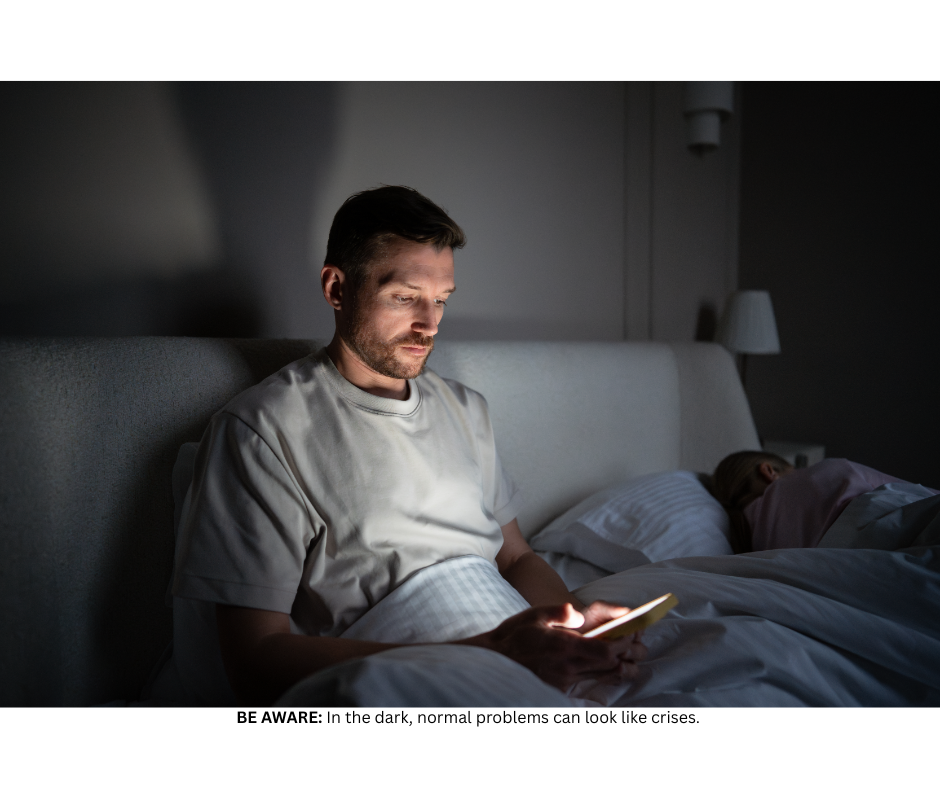
In the dark, normal problems can look like crises.
Fatigue lowers our emotional defences, stress hormones stay switched on, and small doubts quickly turn into “what if everything falls apart?” stories. If this is you, it’s not a personal weakness – it’s a human nervous system doing its best to protect you at the worst possible time of day.
You don’t have to untangle it alone.
Gentle support, learning to work with your nervous system, and giving your worries a place to go in daylight can all help your nights become calmer over time.
If your mind does its worst overthinking at night, you’re not broken – but you may need a different relationship with your thoughts and your nervous system.
Three small, realistic steps that can help:
Make a “worry appointment” in daylight : Set aside 10-15 minutes earlier in the day to jot down the things your brain usually saves for 3am. and what’s in your control vs not. When those thoughts show up at night, you can gently say, “Not now, I’ve got time booked for you tomorrow,” instead of wrestling with them in the dark.
Give your body a clear wind‑down signal: About an hour before bed, start a quiet routine: dim the lights, step away from news and scrolling, maybe a shower, gentle stretches, or a familiar book. The content matters less than the consistency – you’re teaching your nervous system, “We’re safe, it’s bedtime now,” instead of expecting it to slam from fifth gear into park.
Have a plan for wakeful nights: If you’re still wide awake after about 20 minutes, get up, go to a different chair, and do something low‑key (slow breathing, colouring, a comforting podcast at low volume). The aim isn’t to “knock yourself out” but to keep night from becoming a torture chamber of clock‑watching and self‑blame. When sleepiness returns, you go back to bed.
None of this has to be perfect. Tiny, kind changes practiced over many nights can slowly teach your brain that bed is a place for rest again – not a battleground with your thoughts.
What’s keeping you awake at night? Would it help to talk to an ex-insomniac therapist Con Healy at Wisdom with Whiskers Counselling?